Some magic acts rely on cards, coins, or complex props — but the most creative performances are the ones that turn something simple into something impossible. This audition is a perfect example of how imagination and illusion can transform a basic drawing into a shocking stage moment.
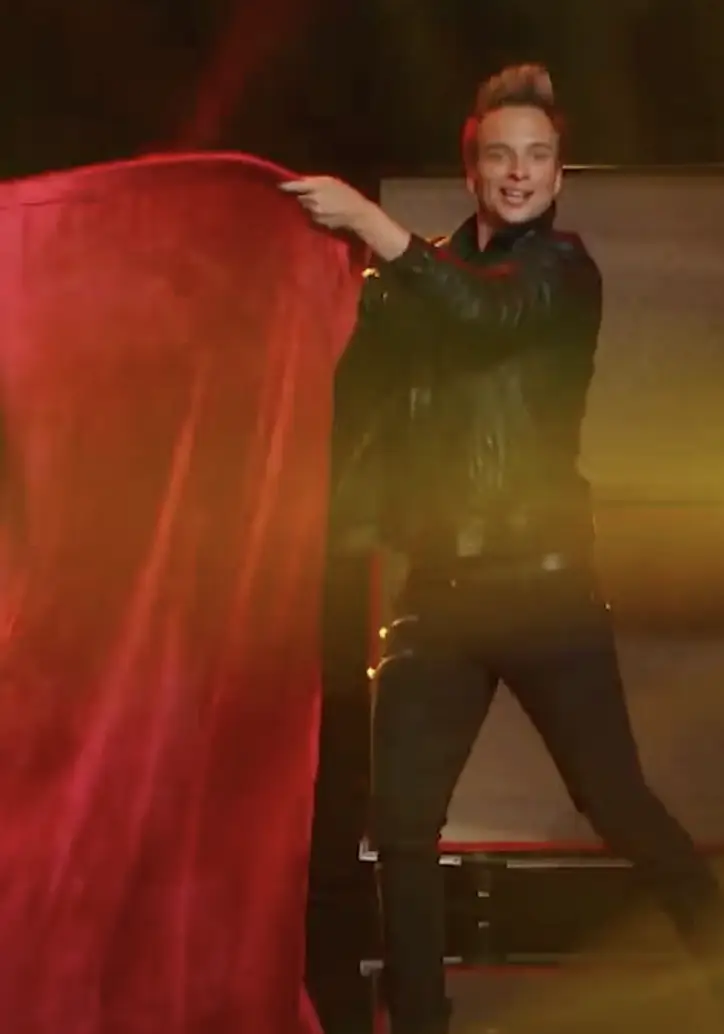
From the beginning, a young magician stepped onto the stage with a calm and confident presence. The judges immediately focused on him, curious about the unusual setup he brought with him. There was no obvious large-scale prop — just simple boards and drawings.
As the performance began, the magician introduced a drawing of a bowling ball. This simple visual immediately caught the audience’s attention because it seemed too basic to be part of a major illusion. However, that simplicity was exactly what made the act so intriguing.
The idea was straightforward but unusual: turning a drawing into something real or physically interactive.
One of the most striking aspects of this performance was how it used imagination as the foundation of the trick. Instead of relying on hidden mechanisms or elaborate setups, the magician built anticipation through visual storytelling.
As he held up the drawing, he explained or implied that something would happen to it. The audience watched closely, trying to anticipate how a flat image could be transformed into a physical illusion.
The judges leaned forward, clearly trying to understand the direction of the act. Moments like this are powerful because they challenge expectations in real time.
As the performance progressed, the magician introduced additional visual elements — including a yellow board and a transition that suggested movement from drawing to reality. This shift added tension and curiosity.
One of the most impressive moments came when the concept evolved from a simple drawing into the idea of an object appearing or transforming in a physical space.
The phrase “empty cage” suggested that something had been transported or created from the drawing itself. This type of illusion relies heavily on timing, misdirection, and audience perception.
The audience reaction began to build as the transformation unfolded. People were visibly engaged, trying to track how the drawing could connect to the physical illusion on stage.
The judges’ reactions reflected curiosity and surprise. They followed each step carefully, aware that they were witnessing a creative and non-traditional form of magic performance.
As the act continued, the magician maintained control over pacing. Each reveal was carefully timed to maximize impact and keep attention focused on the transformation process.
One of the strongest elements of this audition was its originality. Instead of classic magic tricks, it used drawing, imagination, and visual storytelling to build an illusion that felt fresh and unexpected.
As the performance reached its final phase, the illusion expanded beyond the drawing itself, suggesting a full transformation into a physical setup involving a cage-like structure and dynamic stage effects.
This escalation gave the act a cinematic quality, as if the drawing had evolved into a real-world environment.
By the end of the performance, the stage had become a space where imagination and reality blended together. What started as a simple sketch of a bowling ball turned into a full-scale illusion experience.
This audition is a reminder that magic is not only about tricks — it is about creativity, storytelling, and the ability to make audiences believe in the impossible.
In the end, this wasn’t just a drawing trick. It was a visually inventive magic act that transformed a simple sketch into a full AGT illusion experience.